
Granite is the stone of permanence. When civilizations want to build something that lasts 5,000 years, they don’t reach for wood or concrete. They reach for granite. And for much of human history, the best granite came from Egypt. From the unfinished obelisk in Aswan to modern skyscraper lobbies in Dubai, Egypt granite has been the backbone of both monuments and modern architecture. Here’s why this stone is still in demand worldwide.
A History Written in Stone
Ancient Egyptians were the first to quarry granite on an industrial scale. The Aswan quarries in Upper Egypt supplied the massive blocks used in pyramids, temples, and statues. The red and black granite from these sites built the inner chambers of the Great Pyramid, the colossal statues of Ramses II, and the obelisks that still stand in Rome, Paris, and Istanbul.
The reason was simple: Egyptian granite is exceptionally hard, dense, and resistant to weathering. In a desert climate where sandstorms act like sandpaper, only the toughest stone survives. That durability was proven when 4,000-year-old granite statues were excavated with crisp details still intact. Modern geologists rank Aswan granite as one of the most durable commercial stones on earth.
What Makes Egyptian Granite Unique
Egypt granite stands out for three reasons: color, consistency, and size.
1. Color Range: The most famous is Red Aswan granite — a deep rose to brick-red with black and gray mineral flecks. It’s the stone of pharaohs and was reserved for royal projects. Other varieties include Gray Aswan, Black Aswan, and the pink-beige Ghazal granite from the Eastern Desert. These tones are warmer than Brazilian or Indian granites, which makes them fit naturally into Middle Eastern and Mediterranean design.
2. Large Block Size: Egyptian granite formations are massive and uniform. Quarries can extract 300-ton blocks, allowing fabricators to cut oversized slabs and monolithic pieces. That’s why you see it used for grand staircases, public art, and seamless building cladding without visible joints.
3. Low Porosity: Egyptian granite absorbs very little water compared to marble or limestone. This makes it ideal for kitchens, outdoor facades, and wet areas where freeze-thaw cycles would crack softer stone.
From Pharaohs to Skylines
The ancient world used Egypt granite for symbolism and structure. Obelisks were carved from a single granite piece to represent a petrified ray of sun. Sarcophagi were made of granite to protect the dead for eternity. The stone’s difficulty to carve was a feature, not a bug — it signaled that the owner had the resources to command thousands of workers and years of labor.
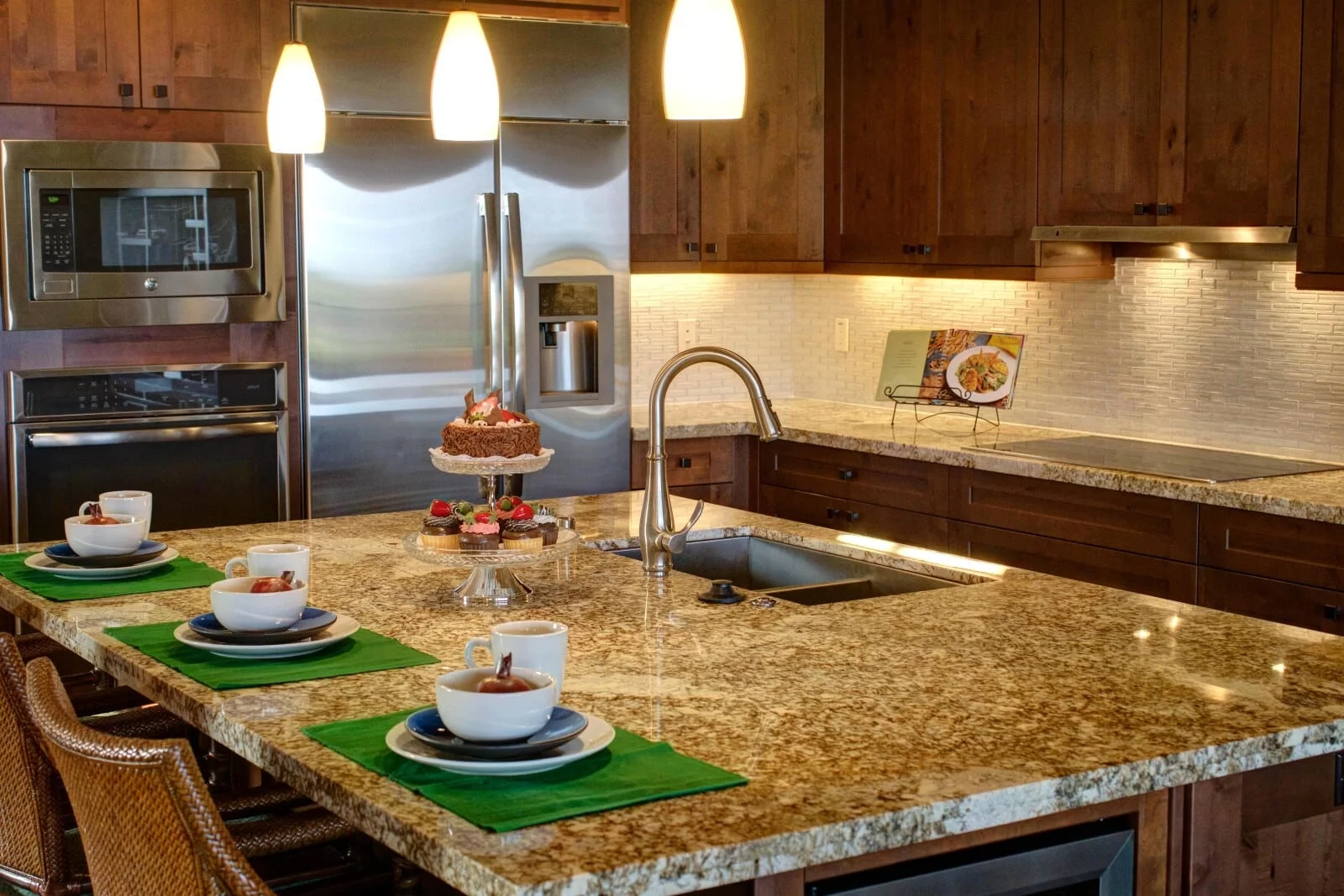
Today, the reasons are more practical. Egypt granite is specified in commercial architecture because it handles abuse. Airport floors in Cairo and Jeddah use it because it won’t scratch under rolling luggage. Building facades in the Gulf use it because it doesn’t fade under UV or pit from sandstorms. Kitchen countertops use it because it resists heat, stains, and cuts better than almost any surface.
The cost also matters. Egyptian quarries produce high volumes with relatively low labor costs. That means Egypt granite often comes in 20-30% below comparable Brazilian or African granites, while matching them in performance. For a 40-story tower needing 100,000 sq ft of cladding, that’s a material difference in budget.
Modern Quarrying and Finishes
Ancient Egyptians split granite with dolerite hammers and wooden wedges. Modern quarries use diamond wire saws and water-jet cutting to reduce waste and get cleaner blocks. This tech means today’s slabs have fewer cracks and more usable surface area.
Finishes have evolved too. Beyond the traditional polished look, Egyptian granite now comes in:
– Flamed: Heat-treated for a rough, slip-resistant surface. Used for exterior paving and steps.
– Leathered: Brushed for a soft, textured feel that hides fingerprints. Popular for kitchen counters.
– Honed: Matte finish that looks natural and hides wear. Common in high-traffic commercial floors.
These finishes let architects use the same stone for glossy hotel lobbies and rugged outdoor plazas while keeping a consistent material palette.
Where You’ll Find Egypt Granite Now
Look at luxury developments across the Middle East and you’ll see it. The facades of government buildings in Cairo. The flooring in Dubai Mall. The kitchen islands in branded residences in New Cairo. It’s also exported heavily to Europe for public squares and monuments because it matches the aesthetic of historical sites.
In the US and Asia, Red Aswan is used as an accent stone — a bold reception desk, a feature wall, or monument signage. The color carries authority. When a company or city wants to project permanence, they choose granite. When they want that permanence with a historical link, they choose Egypt granite.
Sustainability and Sourcing
Granite is a natural material, but quarrying has impact. The main Egyptian producers now recycle 90% of water used in cutting and use waste stone for aggregate. Blocks are shipped directly from Suez and Alexandria ports, cutting transport emissions compared to stone that travels from inland Brazil or India.
For buyers, the key is traceability. Ask for the quarry name and geological report. True Aswan granite will have a tight, uniform grain without large color shifts. Because it’s so dense, it also has low embodied carbon per year of service life. A granite floor that lasts 100+ years beats vinyl that’s replaced every 10.
Caring for Egyptian Granite
The main selling point is low maintenance. Seal it once every 3-5 years, not annually like marble. Clean with mild soap and water. It won’t etch from lemon juice, won’t burn from hot pans, and won’t chip easily. For commercial spaces, that means lower lifecycle costs and fewer tenant complaints.
Conclusion
Egyptian granite earned its reputation in temples and tombs, but its future is in modern architecture. The same properties that let it survive 5,000 years in the desert — hardness, density, color stability — make it perfect for today’s high-traffic, high-design projects.
It’s not trendy. It won’t go out of style next year. When the brief calls for a material that looks important and lasts longer than the building’s mortgage, Egypt granite is still the answer. From the pyramids to the penthouses, it remains the backbone of structures meant to outlive us all.
